

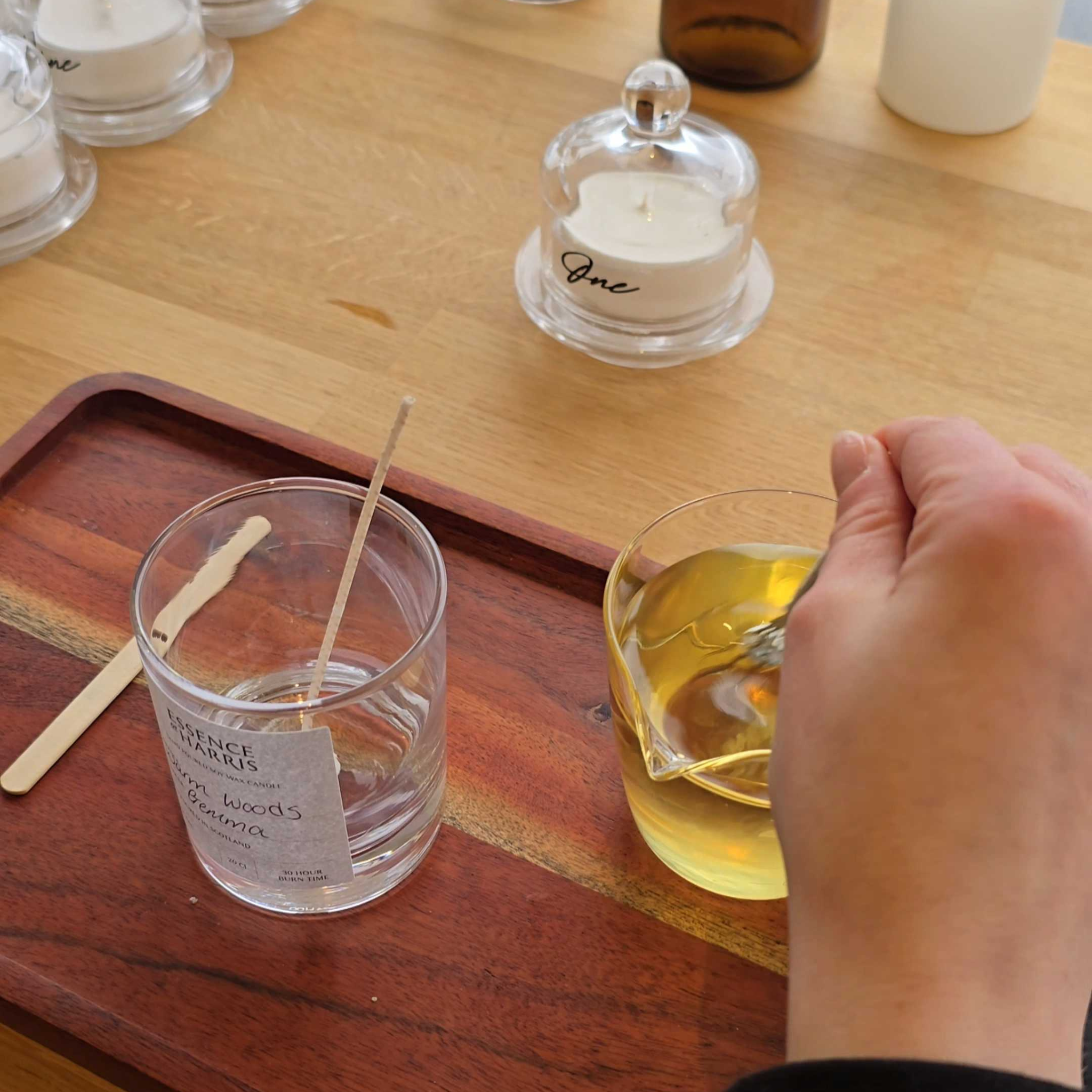
Choosing the right candle starts with understanding what it’s made from; and one of the most important elements is the wax itself. When it comes to soy wax vs paraffin wax, many candle lovers want to know which is better, and how each affects the overall experience. Both soy wax and paraffin wax are widely used in candles, and chances are you’ve enjoyed both without even realising it.
However, a common question we hear is: are soy wax candles better than paraffin candles? The honest answer is that it depends on what matters most to you. Across the candle market, different brands choose different waxes depending on factors such as burn quality, scent throw, sustainability, and cost. Taking these factors into account, you’ll need to decide which type of wax fits your home, lifestyle, and values.
In this guide, we’ll break down the key differences between soy wax and paraffin wax, answer what paraffin wax is, and help you decide which candle wax is the right choice for your home.
What are candles made from?
Candles are typically made up of four key elements: wax, fragrance oil, a wick, and a vessel. Each plays an important role in how a candle looks, performs, and scents your space.
The wax acts as the fuel source, gradually melting as the candle burns. The wick draws the melted wax upward to sustain the flame, while the fragrance oil creates the scent throw we all love, filling your room with your favourite fragrances. Finally, the vessel plays a bigger role in burn quality than many people realise, helping to regulate how evenly the candle burns, while also adding to the overall aesthetic of your home.
When it comes to candle wax, there are several different types, each with its own characteristics.
Beeswax, for example, is known for its subtle honeyed scent and natural golden colour, and is often used in pillar and taper candles as it tends to drip less than other waxes. Other popular options include rapeseed wax, coconut wax, soy wax, and blended waxes, which are often chosen for their burn performance and more sustainable credentials. In many cases, waxes are blended together to improve burn time, scent throw, and texture.
Among all these options, soy wax and paraffin wax remain two of the most widely used waxes in home fragrance. At a glance, these waxes have clear differences.
-
Soy wax is a plant-based wax, often chosen for its smooth finish, slower burn, and lower soot production. However, it can be more costly compared to other options.
- Paraffin wax, on the other hand, is often favoured for its lower cost and excellent fragrance performance. It is widely used in mass-market candles and many high street own-brand candles.
Top Tip: find out more with our guide to What is Soy Wax?
Soy wax vs paraffin wax
Although both waxes are widely used across the candle industry, each offers different benefits. As we’ve already touched on, the key differences between soy wax vs paraffin wax often come down to scent throw, source, and sustainability.
We’re not here to convince you one way or the other, but to give you the information you need to make an informed choice for your home and lifestyle.
Scent Throw
Let’s start with scent throw. Scent throw refers to how the fragrance is dispersed throughout your room and the overall scent experience your candle creates.
There are two types of scent throw: cold throw and hot throw.
Cold throw is the fragrance you smell before the candle is lit. If you’re shopping with us in-store, this is the scent you experience when lifting the lid or smelling the candle on the shelf. While cold throw gives a good indication of the fragrance profile, it doesn’t always reflect exactly how the candle will perform once burning.
Hot throw is the fragrance released as the candle burns, filling your room and creating that lingering scent throughout your home.
When comparing soy wax candles vs paraffin candles, paraffin wax often delivers a stronger immediate scent throw. Soy wax, on the other hand, tends to offer a softer, slower, and more consistent fragrance release. Because soy wax burns more slowly, it can create a longer-lasting scent experience over time.
A well-formulated soy wax candle can rival many paraffin options and provide excellent room-filling fragrance. For us, soy wax offers a slower, more luxurious fragrance experience that suits how we want our candles to feel in the home.
Want to explore some new scents? Check out our Small Batch Candles for limited edition scents, designed to reduce waste and give a second life to our products.
Source
So what exactly are soy wax and paraffin wax made from?
Soy wax is made from soybeans. Through a process called hydrogenation, soybean oil is transformed into a solid wax suitable for candle making. It is a plant-based material and a renewable resource, as the crop can be replanted season after season. This makes it a popular choice for natural candles and often appeals to customers looking for plant-based options.
Paraffin wax, by contrast, is derived from petroleum refining and is a by-product of crude oil processing. It has a long history in candle making, dating back to the 1800s. Due to its wide availability and lower production cost, paraffin wax has long been a popular and affordable choice.
Sustainability
From everything we explained above, it may already be clear why soy wax is often seen as the more sustainable choice. Because soy is a renewable crop, it is frequently considered a more eco-friendly alternative to paraffin wax, which relies on fossil fuels.
That said, sustainability is rarely black and white. Both wax types depend heavily on responsible sourcing and manufacturing practices.
For example, it’s worth acknowledging that soy wax has faced scrutiny in relation to industrial-scale farming and the wider environmental concerns around land use and deforestation.
To help reduce this impact, we source our wax from Europe to lower transport emissions, and in turn our carbon footprint, as well as ensuring it is non-GMO soy wax.
Final thoughts: are soy wax candles better?
When it comes to soy wax vs paraffin wax, there is no straightforward answer. Both waxes have their own strengths, from paraffin’s strong immediate scent throw, to soy wax’s slower burn and plant-based origins.
For us, soy wax remains our preferred choice for home fragrance. Its smooth finish, long-lasting burn, and lower soot production help create the slower, more luxurious scent experience we want our customers to enjoy in their homes.
Ultimately, the right choice comes down to what matters most to you, whether that’s fragrance performance, sustainability, burn time, or price point. If you are interested in soy wax products, explore our wider collection of luxury soy wax candles and home fragrance, inspired by our island home.
Want to learn more? We think you’ll love… Layering Scents: Bath, Body and Home | Understanding Our Scent Collection: A Home Fragrance Guide | How to Use Wax Melts